


New robotic device arrives at Owatonna hospital
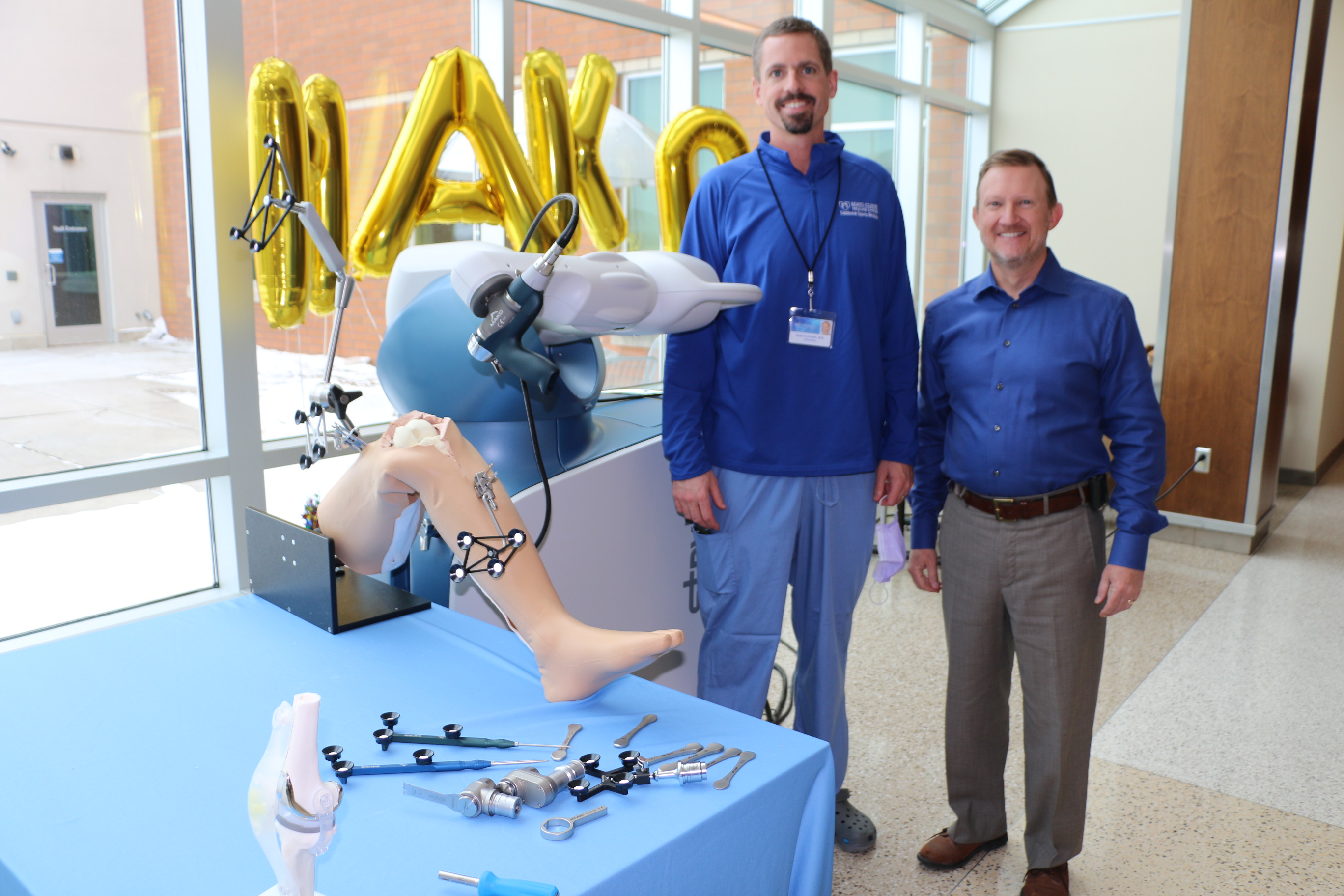
A robotic device designed to improve patient outcomes in knee and hip replacements has been in use for about a month at Owatonna Hospital.
During an open house last week, orthopedic surgeons and a company representative talked about the Stryker Mako Robotic Assisted-Arm. Through use of a CT scan, the device allows surgeons to see a 3-D view of their patient’s anatomy.
Dr. Scott Perkinson said he used the technology long ago in training.
“We’ve been working for a couple of years to bring one here,” he said, adding the delay was about the cost of the equipment.
Every patient has a unique anatomy around their joints, Perkinson said, and the Stryker Mako Robotic Assisted-Arm “helps us put in the knee replacement exactly where it needs to be. It tensions the ligaments perfectly… that helps us tweak the software before we make the cuts.”
Having the 3-D imaging, Dr. David Ivance added, means that “bone cuts are absolutely straight.”
Along with the technology itself, Stryker provides a dashboard so that the hospital can review and evaluate data from each surgery.
Because it takes about three months to heal from a knee replacement, the hospital doesn’t yet have data about whether the Stryker Mako Robotic Assisted-Arm improves patient outcomes. But Perkinson said there is plenty of data from other centers to show that it does.
Ivance said there a few in use in this area; hospitals in the Twin Cities and Rochester have used the technology for a while.
“It’s getting more common,” he added. “We weren’t the first or the last, we’re right in the middle and that’s where we want to be.”
Owatonna Hospital does around 150-200 knee replacements each year, Perkinson said, so the Stryker Mako Robotic Assisted-Arm will get plenty of use.
“We will also use this for hip replacements starting in January,” he said. “It’s exciting.”