


20 years later, ‘this was the event in our lives’
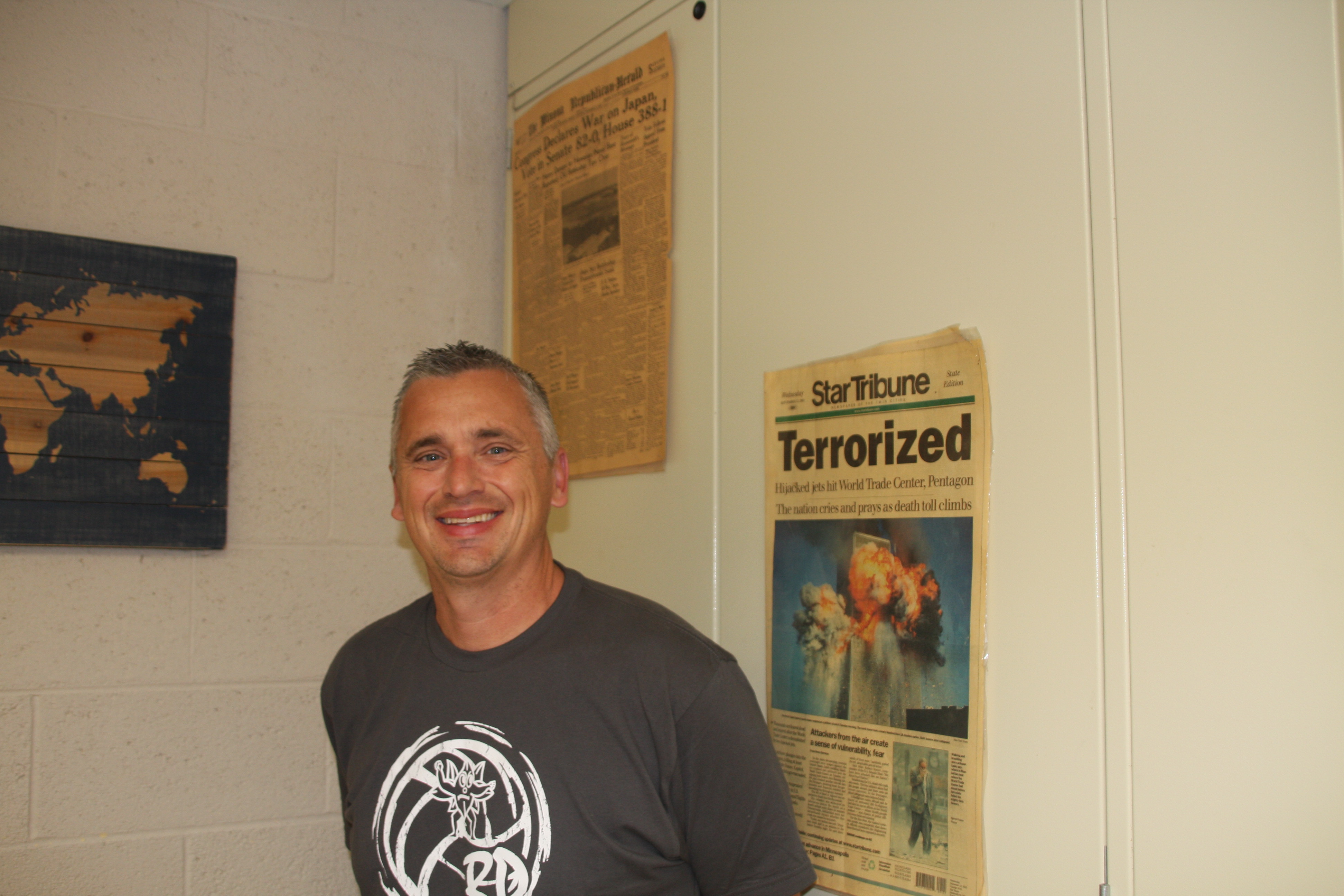
Cory Hendrickson was just beginning his first year as a history teacher at Blooming Prairie High School, his second year overall.
“It was the second week of school, and I didn’t know many people here yet,” he said. “I usually had the TV on in my classroom, but I’d turned it off. Then I heard a couple of women talking out in the hallway, something about a plane hitting a building, and I turned my TV back on.
“I remember right where I was standing when the first building fell,” Hendrickson said.
It was, of course, Sept. 11, 2001.
“My parents always had the discussion of where they were when JFK was shot; for my grandparents, it was Pearl Harbor,” he said. “You could tell (that day) that it was a big deal – I think this was that event in our lives.”
It certainly was for two of his students, who were ninth-graders when they were interviewed by the Blooming Prairie Times on Sept. 25, 2001.
Now the communications manager for the City of Shakopee, Amanda Lillie McKnight said looking back “feels surreal. I have vivid snippets of memories from that entire morning, including passing notes in geometry with friends, wondering if we were on the brink of World War III. I definitely felt the gravity of the situation.”
So did Sarah Romeo, who said of that day, “my judgments were altered and became more realistic … my young adult dream of ‘wanting world peace’ seemed a little less promising after that day.”
Hendrickson said he remembers watching TV with his classes for the rest of the day, recognizing he was seeing history in the making.
“I don’t remember any directive (from administrators) to do it or not do it,” he said.
As the events were unfolding, Romeo said, “we watched, a few gasps here and there, but mostly in silence. We were old enough to know: We were at war.”
Hendrickson said he remembers watching TV with his classes for the rest of the day, recognizing he was seeing history in the making.
“I don’t remember any directive (from administrators) to do it or not do it,” he said.
As the events were unfolding, Romeo said, “We watched, a few gasps here and there, but mostly in silence. We were old enough to know: We were at war.”
“The teachers basically let us watch the news in every class,” McKnight said, “and some of them tried to offer context and reassure us that we were safe. They were all clearly in shock, too, and understandably so.”
After that initial shock, Hendrickson had a job to do: Helping students understand the inexplicable.
“I think the first thing we talked about is the reason why it happened,” he said, “all the things leading up to it: the Persian Gulf War, Russian invading Afghanistan. But it wasn’t a typical war, against a single country; we didn’t understand all the tentacles in Al Qaeda. I never thought it was last as long as it did.”
The attack and subsequent war couldn’t help but affect her thoughts about politics and international affairs, McKnight said.
“At the risk of sounding dramatic, I believe it molded an entire generation. The 20-year-war is something I never could have imagined in 2001,” she said. “What a detriment to so many lives, here and abroad, and a waste of our country’s resources.”
Hendrickson said it was a lesson in how things “matter in the whole world, how connected it all was.”
The lessons have changed somewhat.
“The first couple of years, the kids (I taught) were in high school when it happened; then it was elementary school… Now, these students weren’t alive then,” Hendrickson said, “so we just talk about ‘what do you guys know about the role of the U.S. in the war,’ then what draws us into the world? People aren’t always happy to see us.”
Still, he said, “no matter who it was, in 2001, we didn’t have a choice. George W. Bush had to do something, but in society, we see it through a political prism – and it’s a different world.”
McKnight, now a mother herself, recognizes the changes.
“If I could talk to 2001 Amanda, I’d tell her that she’s often going to feel helpless when it comes to international issues, but she should always seek to be inclusive and impactful in her own community,” she said.
“I can’t save the lives of our soldiers and the Afghan civilians who have died, but I can have empathy for what the survivors have all been through, and act accordingly.”
Romeo echoed the sentiment, thinking of those left behind.
“... what I can’t help is to also think of those innocent people that we have been saving,” she said, “and now their lives will also be turned upside-down. Women’s rights will probably go out the window and they will definitely revert to their previous lives, prior to our safety.”