


Drug Court grad celebrates two big wins
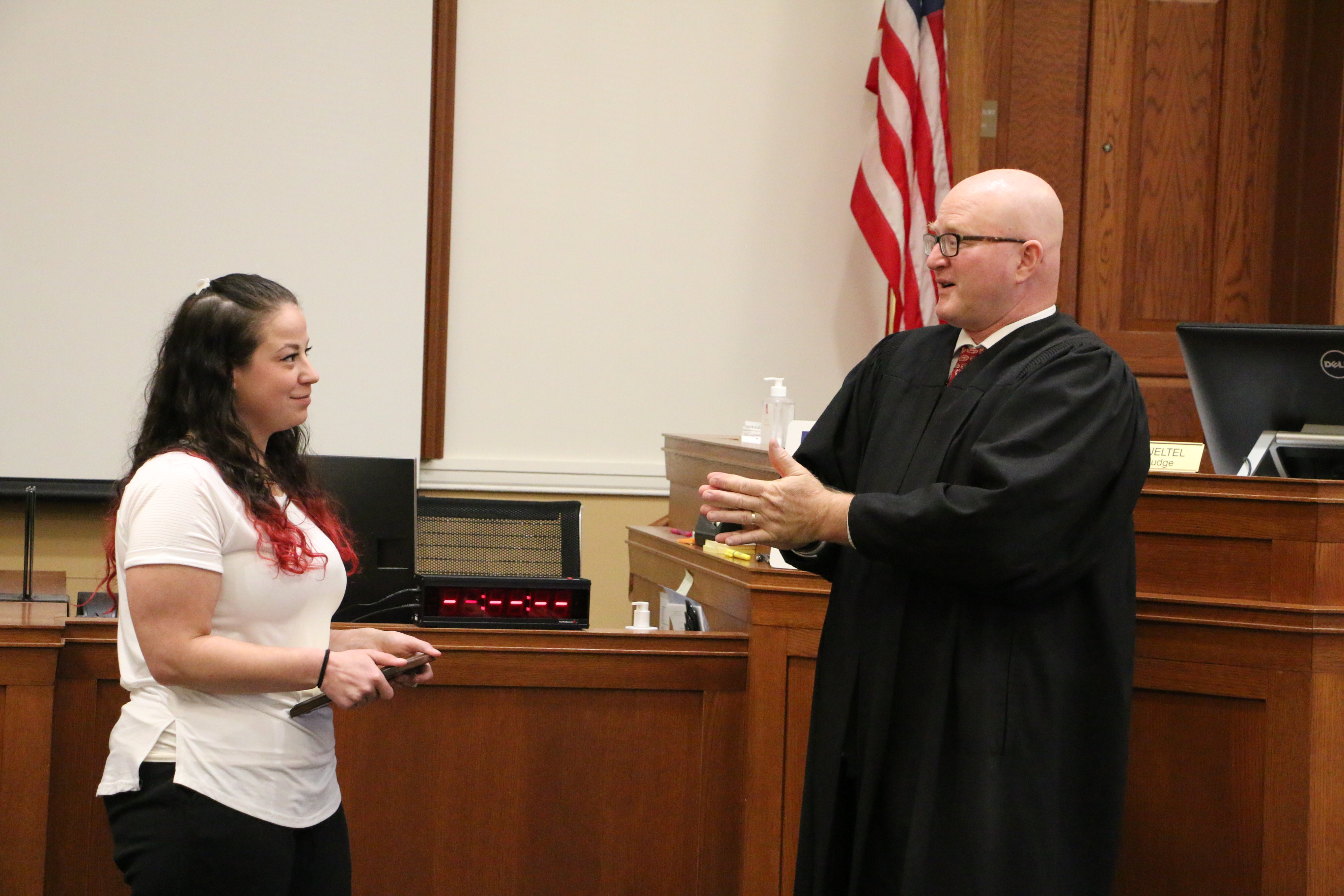
Jillian Larson accepts a plaque from Third District Chief Judge Joseph Bueltel during last week’s Drug Court graduation ceremony. Larson spent four years completing the program, which is designed for people facing drug- and alcohol-related charges. Staff photo by Joni Hubred
Jillian Larson celebrated two big achievements on Oct. 26: graduation from Steele/Waseca Drug Court and finally getting her driver’s license.
An alternative for those who are facing drug- and alcohol-related charges, Drug Court provides an opportunity to avoid or reduce jail time. Steele and Waseca counties partnered to offer it in 2013.
Larson chose Drug Court four years ago, after she was arrested on a felony violation of a harassment order and facing 15 months behind bars. And she’s certain that’s where she would be if not for the program.
“From where I was four or five years ago to now, I’m getting help with my anger and mental health,” she said. “I’ve now learned that caused a lot of my problems.”
During last week’s court session in front of Third District Chief Judge Joseph Bueltel, about a dozen men and women participated in person and via teleconference. Some had been in the program for months; others were just starting.
But everybody has to follow the rules. They generally include getting a substance abuse evaluation and treatment, attending hearings, frequent drug testing, meeting with Drug Court staff, paying restitution and/or court costs, pursuing employment and educational goals, and obeying all laws.
Before Larson’s graduation, Bueltel talked with each participant to work through violations of the rules, from a missed probation appointment to an assault charge. He also asked everyone to think about what they would tell their 16-year-old selves given what they know now.
Most said they would make better friends, finish high school, and pursue the things they enjoyed doing back then. Almost all raised their hands when Bueltel asked who had started using drugs by the age of 16.
Coordinator Nicole Grams said around 200 people have entered Drug Court over the past eight years, but only half have made it through.
“That’s something we consider a problem,” she said, adding those who leave are typically young men with a history of criminal behavior. “We want to change that curve.”
The key to handle a relapse, she told participants, is having a support system in place and “taking care of your mental health. That’s what works.”
“We get you connected with the recovery system, but long-term, it’s up to you to do the work,” Grams said.
Drug Court participants have racked up 5,998 days of sobriety combined over the past eight years. Larson added 123 days to that total. She has been sober longer but the clock resets when a participant misses a drug testing appointment.
Larson’s sister has also completed the program; Jennifer Bobo graduated earlier this year. Having her sister in the program, Larson said, “made it easier. I kind of knew what to expect.”
“I am beyond proud of my sister,” Bobo said. “She’s got hope again. She has opportunity now.”