


BOUNTIFUL IN THE HEARTLAND
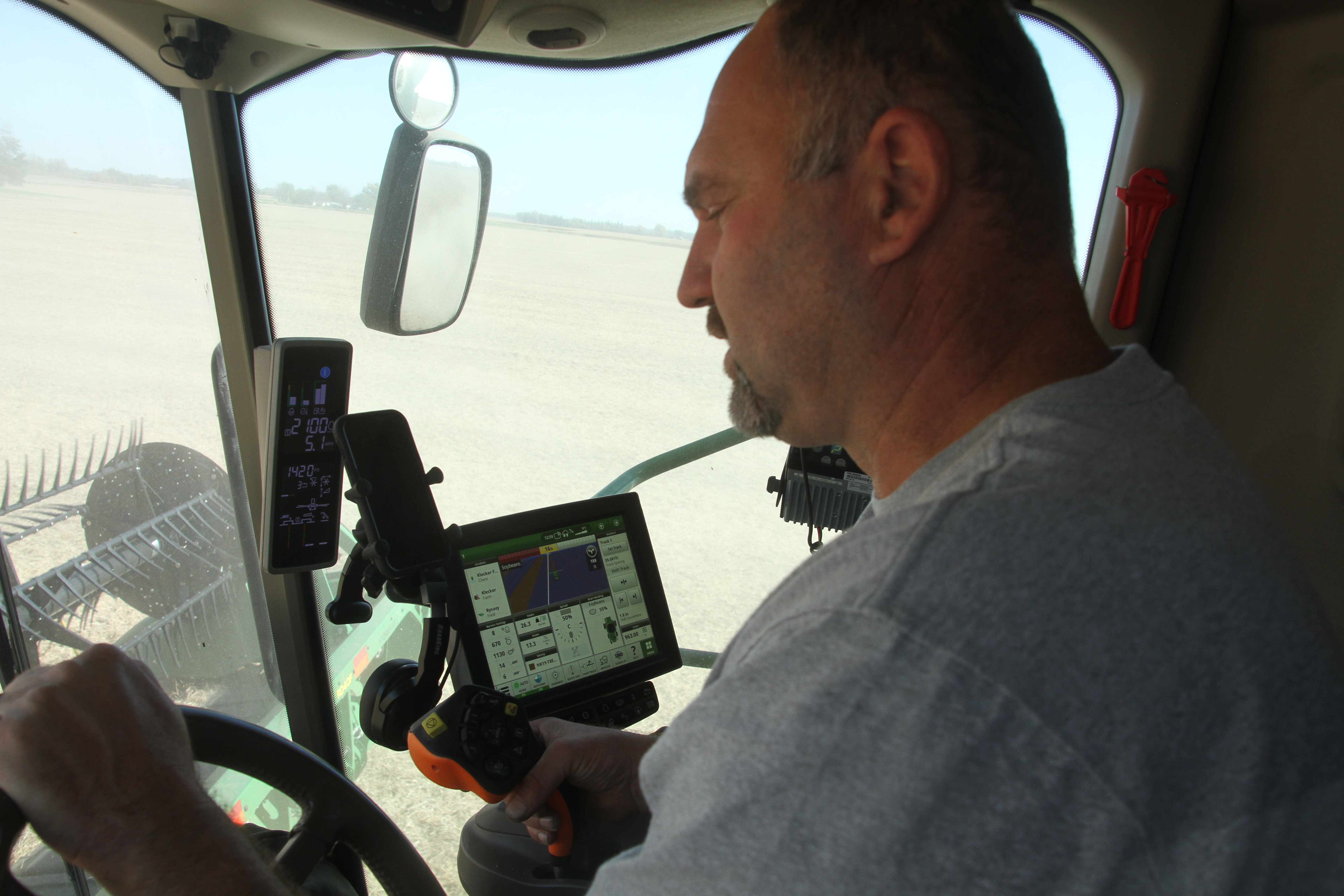
Dave Klecker has been behind the controls of the combine for the past 28 harvest seasons.
-Dave Klecker, Area Crop Farmer
As Dave Klecker winds his combine through the farm fields of southern Minnesota, he’s finding a pleasant surprise with his soybean harvest.
“We knew it would be a good crop, but it’s 10-to-20% better than we expected,” said Klecker, a veteran crop farmer who lives in the Litomysl area of Steele County.
On Saturday, Klecker and other family members operated two large John Deere combines with 40-foot and 35-foot swaths harvesting the beans. They have a wagon running next to the combines to avoid any slowdowns with unloading the beans. Klecker said they can harvest about 30 acres per hour with two combines. They expected to be done with the beans on Tuesday and will then switch over to corn.
It’s looking as if it will be a record soybean harvest for Klecker as well as many other farmers across the region. Klecker’s yields are coming in at the mid 70s to 80s bushels per acre, well above the national average of 53.1 bushels per acre.
But the higher crop yields are being overshadowed by high production costs. Farmers are paying record prices for diesel hovering at the $5.00 per gallon mark, about double what it normally is. “The diesel prices have been outrageous,” Klecker said. “I’ve never seen it this high. It’s the most I have ever paid.”
Klecker’s soybeans are either stored at his farm or hauled to Mankato by semi-truck.
Some of the land Klecker operates is located south of Claremont and belongs to the Rysavy family. Klecker has clear sailing through the fields except for one obstacle—a lone tree located in the middle of the field, which incidentally is the line marker between Steele and Dodge counties. “It’s a property marker between two farms,” he said, adding the tree once had horses tied to it for farm operations.
Klecker has been farming for 28 years and took over his father, Jim Klecker’s farm, about 10 years ago. He now operates 4,000 acres spanning a 25-mile radius from the home place near Litomysl to Blooming Prairie, Meriden and Claremont. About half of his acreage is soybeans with the other half corn.
“We’ve always farmed a lot of land in a lot of different places,” Klecker said, noting they also perform custom harvesting for other farmers in the area.
With heavy rains coming in during September, Klecker was worried that it may have a detrimental impact on the harvest. However, things dried off quickly and he’s finding the field conditions to be just fine.
Outside of last month’s deluge of rain, Klecker said precipitation has come at the right time throughout the entire planting season, which has helped produce the record yields. “The growing season was ideal,” he said. He added he has come across very few drowned out spots.
For Klecker, farming has become a way of life that he relishes. “It’s very peaceful and relaxing,” he said. “I could do it all day long and never get sick of it. It never gets old.”
He added, “I love being outside and being around the machinery. Harvest is my favorite time of the year. You get to see all your hard work from the whole season.”
During peak harvest, Klecker finds himself behind the controls of the combine for at least 12 hours, sometimes even longer into the early morning hours. “If you enjoy it, it’s not really a long time,” he says. “For some reason I don’t get tired.”
Klecker does find some time to sneak away on Friday nights to watch his son, Brendan Klecker, play football for the Owatonna Huskies.
The veteran farmer marvels at how technology has taken over the farm industry over the past 15 years. “Almost everything we have is auto steer,” Klecker said referring to systems that use GPS to automatically guide tractors and combines through fields with high accuracy, reducing overlaps and missed spots. “The technology has advanced so much in the past five years. It works so much better.”
As Klecker harvests, he reflects back on the growing season and how things could be changed. “We start thinking about next year and what we would do differently,” he said.
Klecker is just as optimistic with the pending corn harvest, which he said will take him about three weeks to complete. “It’s better than it looks,” he said, adding “we’re hoping for a lot of good weather.”
And if the soybean crop is any indication, this harvest will be one for the record books.
“We hope for great yields, and we have succeeded with that,” Klecker said.