


HOT PURSUIT
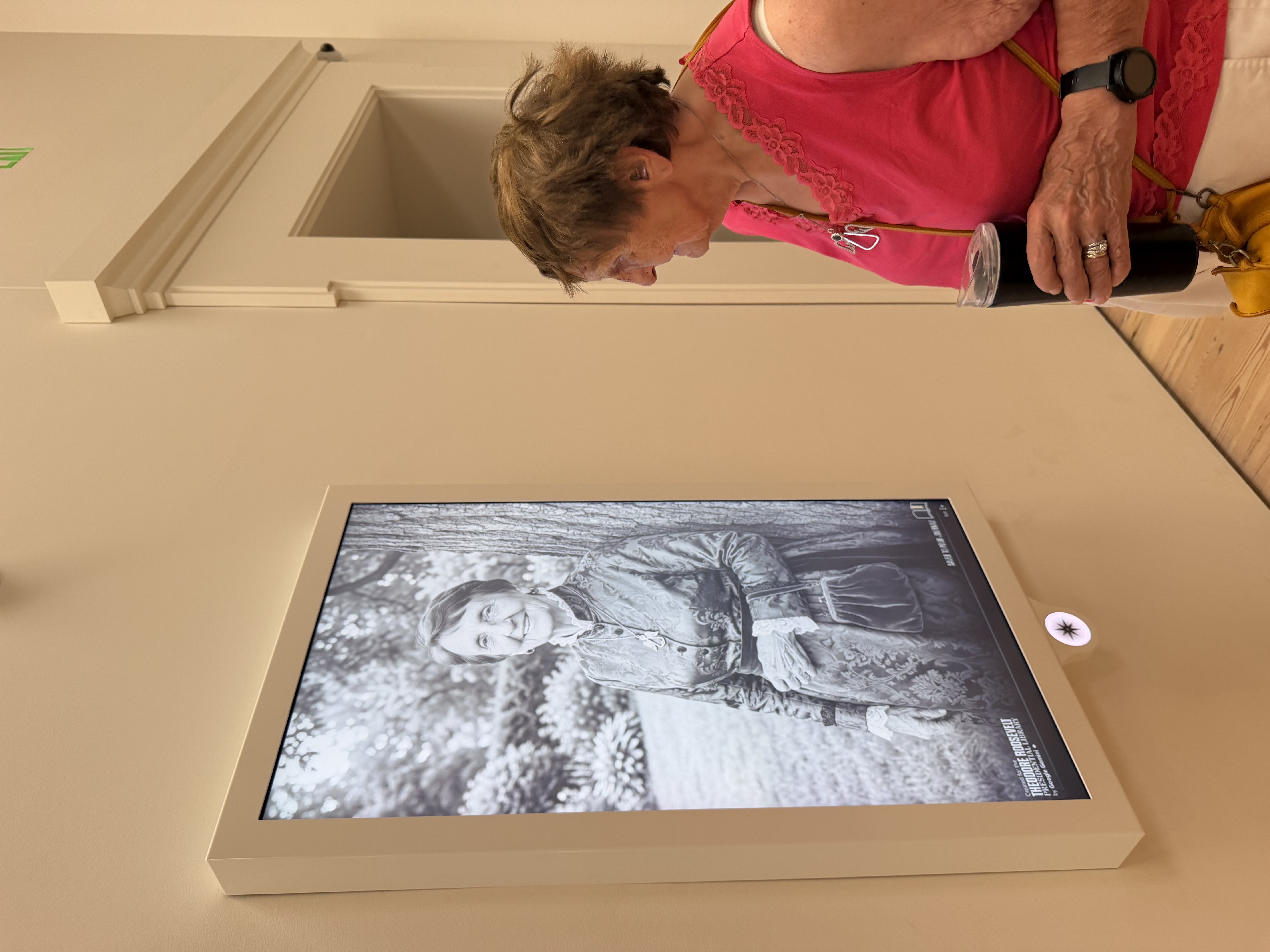
One of the features at the new Theodore Roosevelt Presidential Library is AI-generated photos on large screens. The photos take you back in time to the Roosevelt era of the early 1900s. Staff photo by Kyrie Bussler

It’s a hidden treasure that has found its way onto the prairie land of North Dakota. Earlier this month, the Theodore Roosevelt Presidential Library opened in Medora.
Within the past few weeks, I took great American road trip across North Dakota to check out the new $450 million library that shares the amazing story of our 26th president. It’s refreshing from the billionaire presidents we’ve been accustomed to operating our country in recent times.
Roosevelt is widely considered one of the top five most popular presidents of America. What intrigued me about his story is his humble beginnings and attachment to the plains and badlands of North Dakota.
Now 107 years after his death, we are learning more about this great man at what’s widely considered America’s most remarkable presidential monuments yet. He was only 60 when he died. Most presidential libraries are in or near large cities.
Why Medora?
The Roosevelt library overlooks Medora, a tiny town of 130 and the only incorporated city in Billings County. This rare gem highlighted by its earthen roof rising from the butte and echoing the landforms of the surrounding Badlands offers something that no other presidential site can offer—a fabulous landscape right outside its front doors, preserved in a national park named after Roosevelt.
Medora is largely credited with transforming Roosevelt before he took over the country’s top spot. Roosevelt grew up in New York and the story of how he came to love North Dakota is quite compelling.
At 24 years old, tragedy struck Roosevelt’s life. Both his mother and wife died in the same house on the same day on Valentine’s Day 1884. Dealing with grief that overshadowed his life, he headed out west to North Dakota. He was living the life that he only read about in books.
Roosevelt came to love nature, and certainly there probably is no better place in the world to experience it than North Dakota. At the time he was a broken man in a broken land, and he found nature to be his healer. He loved wildlife in the Little Missouri Badlands.
Years later after becoming president, Roosevelt made it clear that if it weren’t for his experiences in North Dakota, he would have never been president.
The library is not connected with the other presidential libraries around the country. It’s not a traditional museum, but rather an immersive journey into Roosevelt’s life and legacy. It blends exhibits and artifacts with interactive stations and wall-sized screens designed to inspire adults and kids to get “in the arena” and “spend (themselves) in a worthy cause,” as TR put it in a memorable speech in 1910.
A wristband is provided to guests to take AI-generated photographs from the Roosevelt era. They photos are later emailed to you at no additional cost. This is the first presidential library built with AI.
The design process for the library is informed by Roosevelt’s personal reflections on the landscape, his interest in environmental stewardship and periods of quiet introspection and civic engagement in his life.
Officials want the TR library to challenge people, to reconnect families, to get kids off of screens and to think about where they want to go in the future. And they want people to enjoy the beauty of nature.
Roosevelt’s wishes were for people to dare greatly, think boldly, live passionately and care deeply. Something I found interesting was one of his many great quotes: “Patriotism means to stand by the country. It does not mean to stand by the president.”
It’s a cultural adventure that I hope you can go in hot pursuit of enjoying at some point in your life ventures.