


Kruckeberg to demo main LACA building in BP
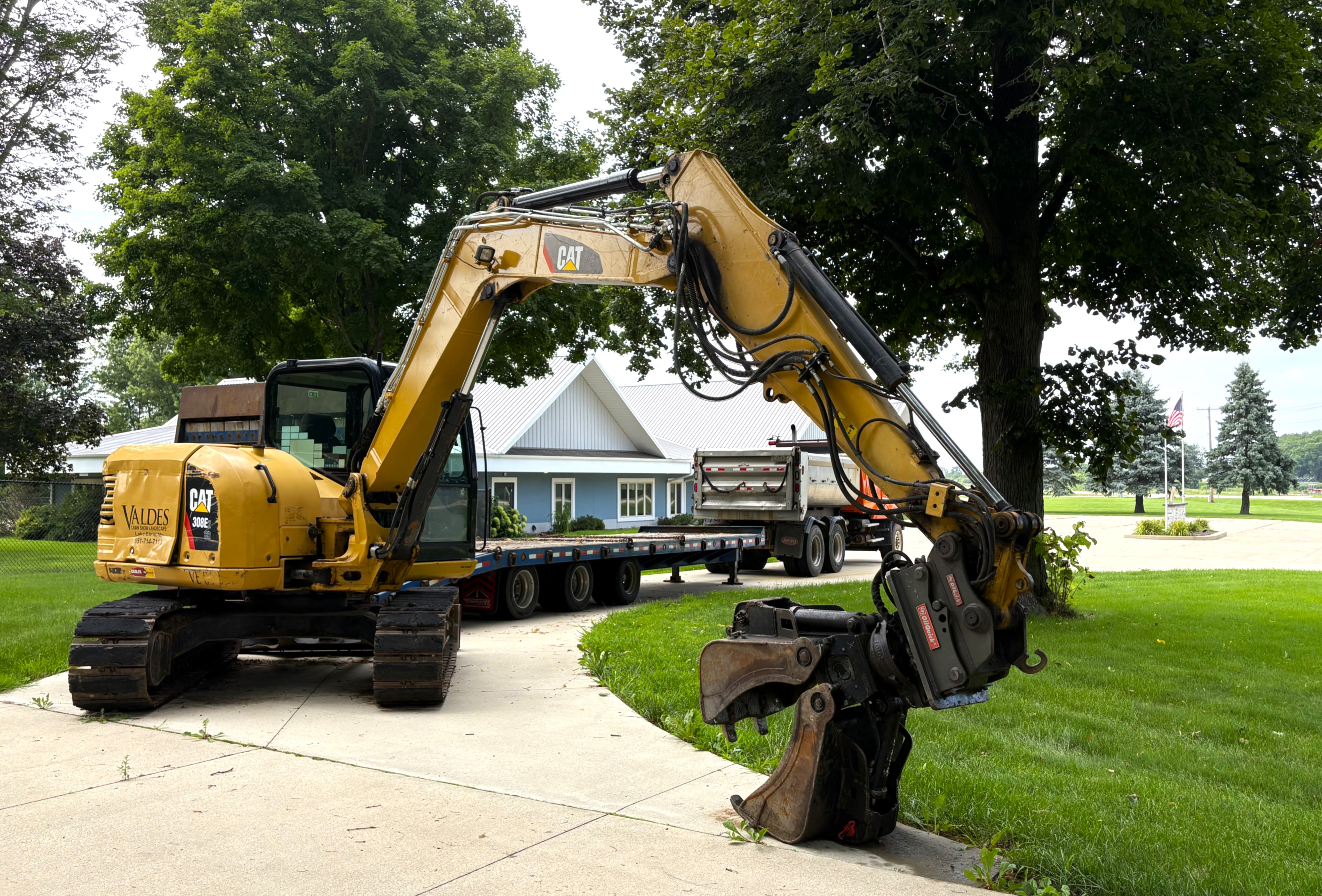
An excavator sits outside the former Leo Augusta Children’s Academy main building, which has been empty since the facility closed in July 2025. Owner Craig Kruckeberg plans to demolish the building, saying the $70,000 annual property tax makes it unsellable. The building was once the site of Minimizer, which Kruckeberg’s father founded. Staff photo by Kay Fate
“I’m tearing the building down.”
That was former Blooming Prairie business owner Craig Kruckeberg’s response to a question about an excavator sitting outside his building on the north side of town.
Leo Augusta Children’s Academy opened in 2022 after a complete overhaul of the main building, creating several bright, open classrooms and a commercial kitchen.
It offered licensed child care and enrichment programs for up to 134 children, from six weeks old through sixth grade. Its mission was to provide excellence in early education through its nearly 20 staff members.
Kruckeberg leased the building to LACA for $1 a year.
After three years of struggling to generate enough revenue through tuition to offset the day-to-day operational costs, the academy closed in July 2025.
It has been for sale since.
Included in those operational costs, apparently, was that $70,000 property tax bill.
Steele County had assessed the main building after Kruckeberg and his wife Robyn donated the buildings, land and funds to create the high-quality child care center.
Kruckeberg appealed the amount with the Steele County Assessor; the staff asked for six “comps,” or comparable properties.
The comps didn’t change the tax bill; the assessor told Kruckeberg he’d already lowered the property valuation from $1.1 million to $980,000.
“That was when the building was occupied,” Kruckeberg said. “Now it’s completely empty.”
Everything, including the kitchen equipment, was removed when LACA closed.
Kruckeberg said he considered several options, because “what can I do with it to justify the 70 grand a year? I can’t sell to anybody that wants to have a business in there, because they’re going to have to pay me $70,000 a year.”
Turning it into housing, he said, would produce five one-bedroom apartments, at best.
“I’d get maybe $800 a month (per apartment), and that won’t even pay the property tax,” Kruckeberg said, “much less the money I have to put into it again to change it into apartments.”
The only solution would be for a nonprofit – a church or government entity with a tax-exemption – to own it.
He asked, but there were no takers.
“It’s going to cost me about $80,000 to tear it down, so one year’s property tax will pay for the demo of it,” Kruckeberg said.
The other building on the property will remain – for now.